

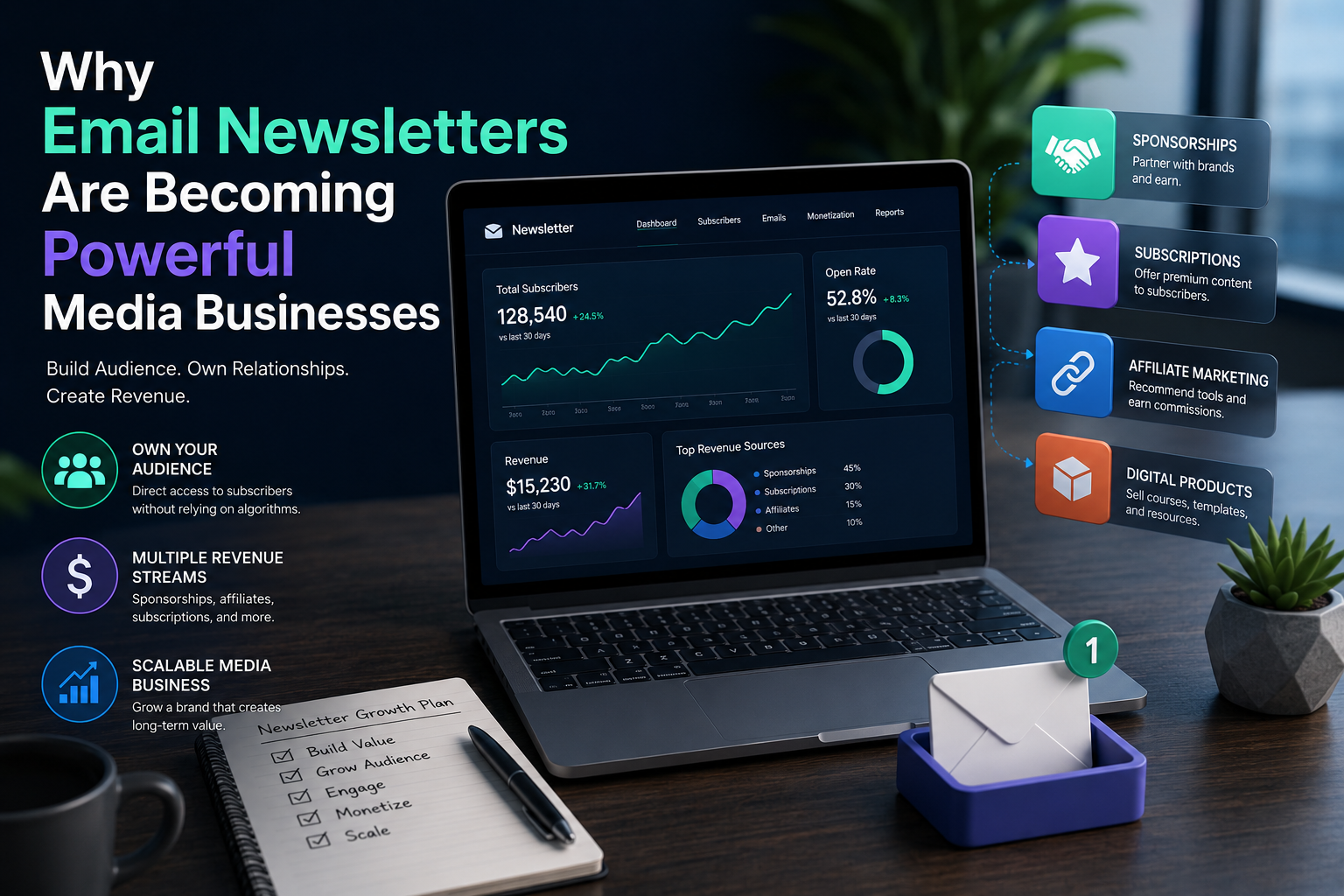
Social media algorithms decide who sees a creator’s content, and that decision changes without warning — a following built over years can lose most of its visibility after a single platform update. Email doesn’t have that problem: a subscriber list is something a creator actually owns. That’s the core reason newsletters like Morning Brew, The Hustle, and TLDR have grown into genuine media businesses rather than staying side projects.
Why Audience Ownership Actually Matters
A creator with 100,000 social media followers doesn’t fully control whether those followers ever see their next post — the platform’s algorithm makes that call. A creator with 20,000 email subscribers can reach nearly all of them directly, on demand, without paying a platform for the privilege. That difference in control is why serious newsletter businesses treat their subscriber list as their most valuable asset, more important than follower counts on any single platform.
How Newsletters Actually Make Money
The businesses that succeed rarely rely on one revenue stream. Sponsorships — brands paying to reach an engaged, niche-specific audience — are often the first real revenue for a growing newsletter. Paid subscriptions work well once a newsletter has established enough trust that readers will pay for deeper analysis or exclusive content. Affiliate partnerships with tools the newsletter’s audience genuinely uses add a third stream without requiring a new product. Combining two or three of these, rather than depending on just one, is what makes a newsletter business genuinely resilient.
Choosing a Newsletter Platform
| Platform | Best For |
|---|---|
| Beehiiv | Media-style newsletters with built-in monetization and referral tools |
| ConvertKit | Creators selling digital products alongside their newsletter |
| MailerLite | Beginners wanting an affordable, simple starting point |
| GetResponse | Business-focused newsletters that also need webinars and landing pages |
The platform matters less than consistency in the early stages — switching platforms later is annoying but rarely fatal, while inconsistent publishing early on is a common reason newsletters never build enough of an audience to monetize at all.
Newsletter Business Models Worth Considering
- Free newsletter + sponsorships — the most common starting model, requires an established, engaged readership before sponsors are interested.
- Premium/paid newsletter — works best in finance, technology, and specialized business niches where readers will pay for genuinely differentiated analysis.
- Community-based newsletter — membership fees for access to a private group alongside the content itself.
- Educational newsletter — content that leads naturally into paid courses or coaching.
How AI Fits Into This
AI tools now help with subject line testing, audience segmentation, and campaign optimization, and that genuinely saves time on the operational side of running a newsletter. What AI hasn’t replaced is the actual editorial judgment and voice that makes a reader trust and stay subscribed to a specific newsletter over the dozens of others competing for their inbox. The newsletters that succeed long-term are the ones where a real person’s perspective and editorial choices are still clearly present, AI-assisted operations or not.
Getting Started
The newsletters that grow into real businesses almost always start narrow — a specific niche and a specific promise to readers — rather than trying to be broadly useful to everyone. Publishing consistently, even at a modest frequency, for six months to a year before introducing monetization tends to work better than trying to monetize from issue one, before there’s enough trust built to support it.
For the tactical side of building the email sequences and campaigns that keep subscribers engaged, see our email marketing guide.
Author
Written by Alibashi Abdirahman Olad, founder and publisher of BashiOnline.
Disclaimer
This content is for educational purposes only. Results depend on niche, consistency, and execution. No specific income or growth results are guaranteed.
[…] Why Email Newsletters Are Becoming Powerful Media Businesses in 2026: Smart Growth Strategies Creato… […]