

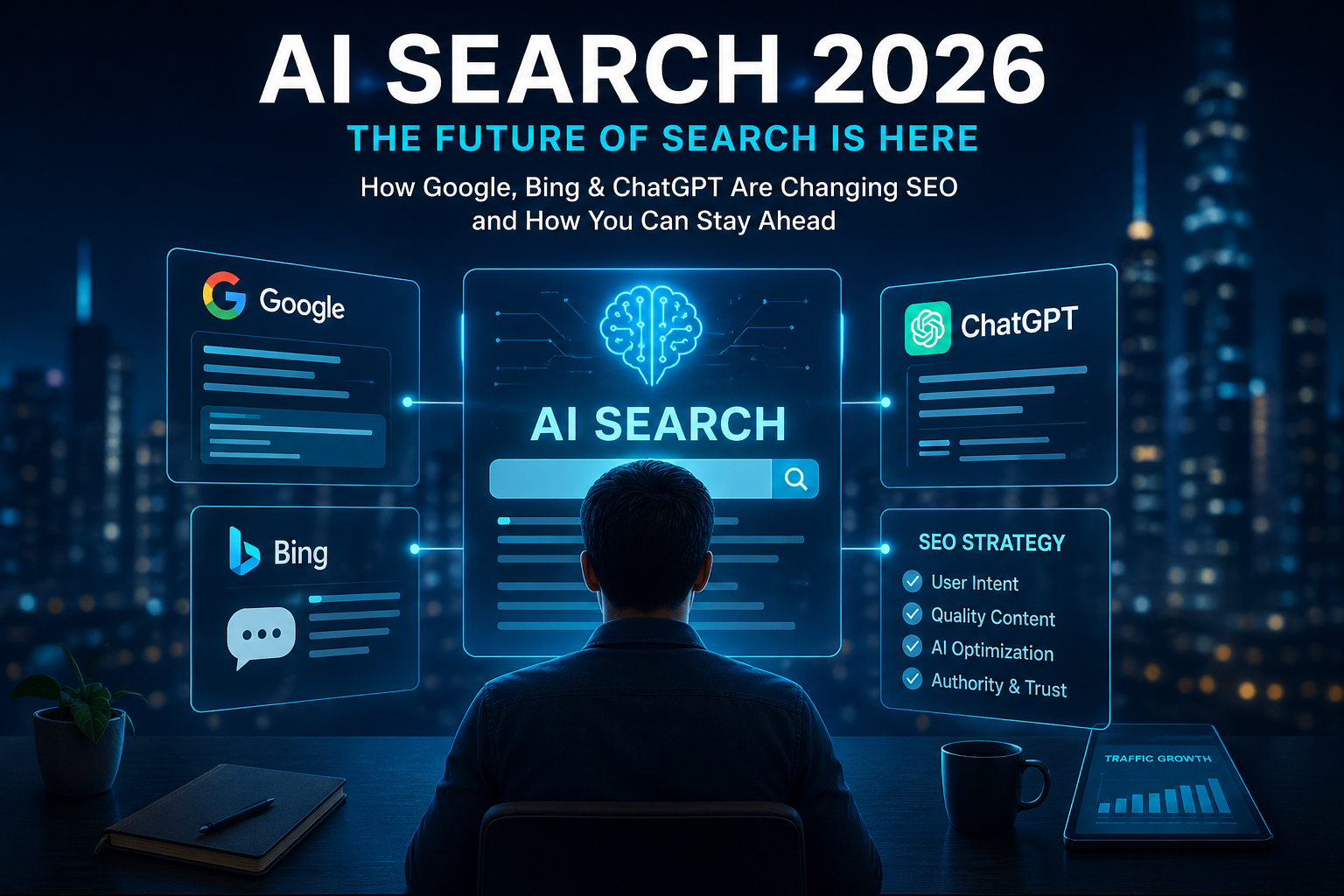
Search is changing in a way that’s already visible in daily use: instead of a list of blue links, Google, Bing, and AI assistants increasingly generate a direct answer on the results page itself. This is often called “zero-click search,” and it’s reshaping what it actually means for a page to “rank.” This guide covers what’s actually different, what still works, and how to structure content for this new environment.
What’s Actually Changed
Traditional search engines matched keywords to pages and ranked them largely by link authority. AI-driven search systems instead try to understand what a searcher actually wants and synthesize an answer directly from multiple sources — which means a page can influence what the AI says without ever being clicked. That’s a meaningful shift: visibility in AI-generated answers matters even when it doesn’t translate into a visit.
| Traditional SEO | AI Search Visibility |
|---|---|
| Keyword targeting | Intent understanding |
| Link building | Authority and trust signals |
| Ranking a page | Being cited in a direct answer |
| Click-through traffic | Visibility inside AI-generated responses |
How Google, Bing, and AI Chat Tools Differ
Google now shows AI-generated summaries directly above traditional organic results for many queries, reducing how often people scroll further. Bing has leaned into a more conversational, chat-based search experience integrated with Copilot. Standalone AI tools like ChatGPT synthesize answers from their training data and, increasingly, live web search, without a traditional results page at all. The practical implication is the same across all three: a page competing purely on keyword density, with no real depth or clear structure, is losing visibility across every one of these systems, not just one.
Is SEO Dead?
No — but it’s evolving past keyword matching into something closer to demonstrated topical authority. Google’s own guidance for search quality continues to emphasize content that’s genuinely helpful and created for people first, which lines up with what AI systems also reward: real depth, clear structure, and credible sourcing rather than surface-level keyword coverage. Thin, generic content is losing visibility faster than deep, well-structured content — that part of SEO hasn’t changed, it’s just become less forgiving.
How to Structure Content for AI Search Visibility
Build Real Depth in a Narrow Topic
Sites that cover one topic area thoroughly tend to get cited and referenced more than sites that cover many topics shallowly. AI systems appear to weigh demonstrated expertise in a specific area more heavily than broad, general coverage.
Answer the Actual Question Completely
Content that fully answers a specific question — not just touches on it — is more likely to be the source an AI system pulls from when generating a direct answer. Partial or vague answers get skipped in favor of sources that resolve the question completely.
Use Clear, Logical Structure
Proper heading hierarchy, short paragraphs, and genuinely useful tables or comparisons make content easier for both AI systems and human readers to parse and extract information from. This isn’t a trick — it’s the same structural clarity that’s always made content easier to read, now mattering more because machines are parsing it too.
Cite Real Sources
Linking to credible, authoritative sources when making factual claims — and being accurate about what those sources actually say — supports both search engine trust signals and simple editorial credibility. Google’s own Search Central documentation is a reliable, frequently updated reference for how the company evaluates content quality.
Tools That Help With This
| Tool | Best For | Trade-off |
|---|---|---|
| Ahrefs | Keyword and backlink research | Accurate but pricier for beginners |
| SEMrush | Full-suite SEO and marketing research | Powerful, but a real learning curve |
| Surfer SEO | Content structuring and optimization | Works best paired with another research tool |
| Grammarly | Writing clarity | Not SEO-focused on its own, but supports readability |
A reasonable starting point for most people is one research tool (Ahrefs or SEMrush) plus a writing clarity tool, rather than trying to run every tool at once.
The Practical Takeaway
AI search isn’t a reason to abandon SEO — it’s a reason to take the “actually helpful” part of SEO more seriously than the keyword-optimization part. Content that fully answers a real question, structured clearly, and backed by credible sources is positioned well for both traditional rankings and AI-generated answers, because both systems are increasingly rewarding the same underlying thing: genuine usefulness. For channel-specific tactics that work alongside this shift, see our guide to AI search optimization strategies.
Author
Written by Alibashi Abdirahman Olad, founder and publisher of BashiOnline.
Disclaimer
This content is for educational purposes only. Search engine and AI systems change frequently; verify current best practices before making major SEO decisions.
[…] AI Search 2026 Guide: Powerful Shift in Google, Bing & ChatGPT Changing SEO15 Powerful Profitable Small Business Ideas with Low Investment for Beginners […]
[…] AI Search 2026 Guide: Powerful Shift in Google, Bing & ChatGPT Changing SEO […]