


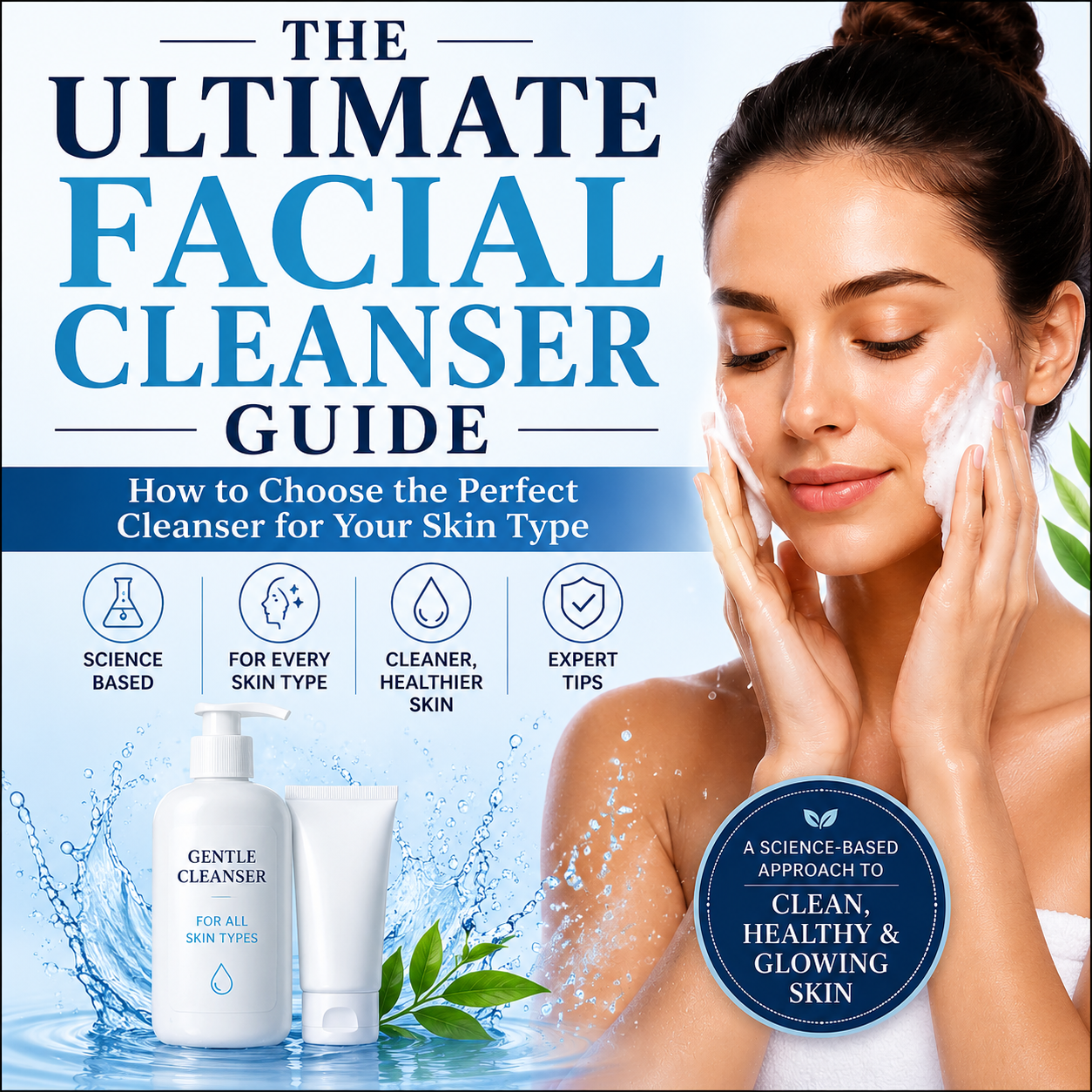
The Ultimate Facial Cleanser Guide
Choosing the right facial cleanser is one of the most important steps in any skincare routine. Yet, many people use products that strip their skin, cause irritation, or simply don’t address their specific needs.
In this comprehensive guide, you’ll learn how facial cleansers work, how to identify your skin type, ingredients to look for, ingredients to avoid, and the tools and resources that can help you make smarter skincare decisions.
If you’re serious about improving your skin health, this guide can save you months of trial and error.
Table of Contents
- Why Facial Cleansing Matters
- Understanding Your Skin Type
- Different Types of Facial Cleansers
- Ingredients That Actually Work
- Ingredients to Avoid
- Common Cleansing Mistakes
- Building a Better Cleansing Routine
- Helpful Tools and Resources
- Why This Ebook Is Different
- Final Thoughts
Why Facial Cleansing Matters
Your skin faces pollution, dirt, oil buildup, makeup residue, and bacteria every single day. Without proper cleansing, these substances can clog pores and contribute to:
- Acne breakouts
- Irritation
- Uneven texture
- Premature aging
- Dull skin appearance
According to the American Academy of Dermatology, proper cleansing is one of the foundational steps for maintaining healthy skin.
However, cleansing isn’t simply about washing your face. Using the wrong cleanser can damage your skin barrier and create new problems.
That’s why understanding facial cleansers is so important.
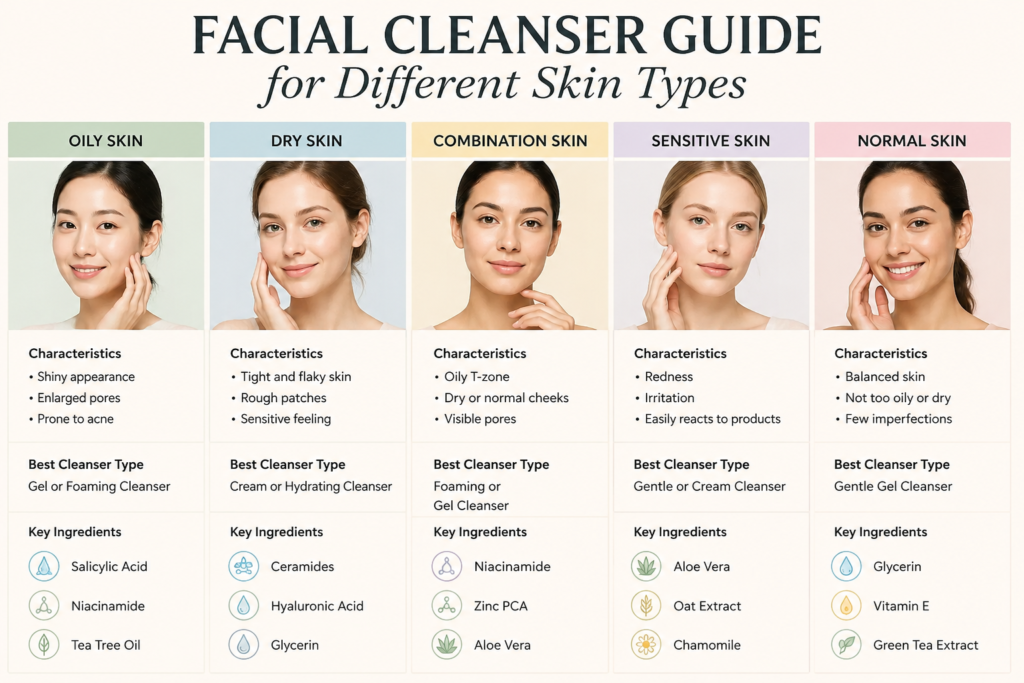
Understanding Your Skin Type
Before buying any cleanser, identify your skin type.
Oily Skin
Characteristics:
- Excess shine
- Enlarged pores
- Frequent acne
Best ingredients:
- Salicylic Acid
- Niacinamide
- Tea Tree Oil
Dry Skin
Characteristics:
- Tight feeling
- Flakiness
- Rough patches
Best ingredients:
- Ceramides
- Hyaluronic Acid
- Glycerin
Combination Skin
Characteristics:
- Oily T-zone
- Dry cheeks
Best ingredients:
- Gentle foaming cleansers
- Hydrating ingredients
Sensitive Skin
Characteristics:
- Redness
- Burning sensation
- Easy irritation
Best ingredients:
- Aloe Vera
- Oat Extract
- Fragrance-free formulas
Different Types of Facial Cleansers
Gel Cleansers
Ideal for:
- Oily skin
- Acne-prone skin
Benefits:
- Deep cleansing
- Removes excess oil
Cream Cleansers
Ideal for:
- Dry skin
- Mature skin
Benefits:
- Moisturizing
- Gentle cleansing
Foam Cleansers
Ideal for:
- Combination skin
Benefits:
- Balanced cleansing
- Lightweight feel
Micellar Water
Ideal for:
- Sensitive skin
- Light makeup removal
Benefits:
- Gentle
- Convenient
Oil Cleansers
Ideal for:
- Makeup users
- Double cleansing routines
Benefits:
- Dissolves sunscreen
- Removes makeup effectively
Ingredients That Actually Work
Not all skincare ingredients are created equal.
Salicylic Acid
Excellent for:
- Acne
- Oily skin
According to research published by the National Institutes of Health, salicylic acid can significantly improve mild acne symptoms.
Hyaluronic Acid
Excellent for:
- Hydration
- Dry skin
Ceramides
Excellent for:
- Skin barrier repair
- Sensitive skin
Niacinamide
Excellent for:
- Redness reduction
- Oil control
Glycerin
Excellent for:
- Moisture retention
- Daily cleansing routines
Ingredients to Avoid
Some ingredients can cause irritation depending on your skin type.
Examples:
- High alcohol content
- Artificial fragrances
- Harsh sulfates
- Certain essential oils
Always patch-test new products before using them regularly.
Common Cleansing Mistakes
Over-Cleansing
Washing your face too often can damage your skin barrier.
Using Hot Water
Hot water strips natural oils.
Skipping Moisturizer
Even oily skin needs hydration.
Choosing Products Based on Trends
A product that works for someone else may not work for you.
Building a Better Cleansing Routine
A simple routine is often the most effective.
Morning
- Gentle cleanser
- Moisturizer
- Sunscreen
Evening
- Makeup removal
- Facial cleanser
- Treatment products
- Moisturizer
Consistency matters more than complexity.
Helpful Tools and Resources for Better Skincare Decisions
Today’s skincare shoppers have access to excellent online resources and tools that make choosing products easier.
Recommended Resources
Ingredient Analysis Platforms
These platforms help you understand ingredient lists and identify potential irritants.
Dermatology Information
Productivity Tools for Beauty Bloggers and Skincare Businesses
If you’re creating skincare content or managing a beauty website, these tools can improve your workflow:
- Canva for graphics and ebook design.
- Grammarly for proofreading.
- Notion for organizing skincare research.
- SE Ranking for SEO and content optimization.
These software tools align well with SaaS-focused content strategies and can support future affiliate opportunities.
Why The Ultimate Facial Cleanser Guide Ebook Is Different
Most skincare advice online is either too generic or too focused on selling products.
This ebook was created to help readers:
✅ Understand different cleanser types.
✅ Identify their skin type.
✅ Learn ingredient science in simple language.
✅ Avoid expensive skincare mistakes.
✅ Build a practical skincare routine.
The guide combines educational information with actionable recommendations that can be applied immediately.
Get Your Copy Today
Ready to make better skincare decisions?
Download the ebook here:
This guide is designed for beginners, skincare enthusiasts, and anyone looking to improve their daily skincare routine.
Final Thoughts
Healthy skin starts with understanding your cleanser.
A good facial cleanser doesn’t need to be expensive. It simply needs to match your skin’s needs and support your skin barrier.
The right information can save you money, prevent irritation, and help you build a routine that works long-term.
If you’re tired of guessing which cleanser is right for you, The Ultimate Facial Cleanser Guide provides the knowledge and practical advice you need to make smarter skincare decisions.